
The Ultimate Wedding Planning Checklist

Planning a wedding is not just about one day, it’s a journey that you’ll be navigating over months. Here is your complete, structured checklist to guide you from the moment you say “yes” to the days after you say “I do.”
The process truly begins about a year in advance, when you make the decisions that will shape everything that follows. Setting the date, ideally with a couple of flexible options, and checking with the most important people in your lives is the first major step. Right after that comes the foundation of it all: establishing a realistic budget. This honest conversation will determine the size of the celebration, the number of guests, the type of venue, and the level of vendors you can hire. Without a clear budget, every other decision lacks direction. When you follow a clear timeline, everything feels intentional instead of overwhelming.
12 Months Before the Wedding
With that foundation in place, you can begin defining the style and scale of your wedding. Will it be an intimate gathering or a large celebration? In your hometown or a special destination? Securing the venue early is essential, because the date only becomes official once the space is booked. If there are vendors you absolutely love, a specific photographer, a dream band, a particular makeup artist, reserve them as soon as possible. The most sought-after professionals are often booked many months in advance. Hiring a wedding planner at this stage can transform the experience from overwhelming to organized and enjoyable.
This is where everything begins, the foundation stage.
Choose your date (allow for flexibility).
Announce your engagement in your own style.
Get your engagement ring appraised and insured.
Decide the general vision: How many guests will you consider? Local celebration or destination wedding?
Establish your budget.
Write your preliminary guest list together.
Start searching for ceremony and reception venues.
Interview and book a wedding planner, especially if it’s a destination wedding.
Secure must-have vendors (photographer, makeup artist, hairstylist, band, etc.).
Launch your wedding website and share preliminary details like date and city.
11 Months Before
As the months move forward, your vision starts to take shape. Defining a color palette and overall aesthetic helps create cohesion across every detail. Choosing the catering is another pivotal moment, since the cost per guest has a direct impact on your overall budget. Once you have a solid preliminary guest list, you can send out Save the Dates and begin collecting confirmations and dietary restrictions. It’s also important to research any legal or religious requirements early on to avoid last-minute complications.
Now your ideas start turning into a vision.
Plan your engagement party (date, guest list, venue, invitations).
Create a moodboard and define your wedding color palette.
Select and reserve your reception venue.
Research legal requirements for the civil ceremony.
Research, interview, and book key vendors:
Photographer
Videographer
DJ and/or live band
Florist
Calligrapher or invitation printer
Catering and dessert service
Choose your catering service to establish a per-person budget and select the menu.
Finalize your guest list and send Save the Dates.
Order invitations (or design virtual ones) and set an RSVP deadline.
Choose and ask your bridesmaids, best man, and flower girls.
Begin planning your honeymoon.
8–6 Months Before
Around six to eight months before the wedding, the decisions become more personal. Ordering the wedding dress and suit with enough time for fittings, booking your honeymoon, and refining the guest experience all become priorities. As the big day approaches, you’ll confirm vendors, define the dress code, choose your registry, and perhaps even take dance lessons to make your first dance unforgettable. Every thoughtful detail contributes to the overall atmosphere of the celebration.
The celebration becomes more personal and detailed.
Order the wedding dress and accessories.
Order the groom’s suit and accessories.
Decide on bridesmaids’ dresses and communicate your choice.
Schedule an engagement photoshoot.
Choose wedding favors.
Book your stylist and makeup artist; start beauty inspiration research.
If it’s a destination wedding, secure hotel room blocks for guests and share details on your website.
Request guest RSVPs and ask about dietary restrictions.
Reserve guest transportation if needed.
Confirm bridesmaids have ordered their dresses.
Research wedding insurance.
Discuss centerpieces and ceremony florals with your florist.
5–4 Months Before
This phase is about organization and refinement.
Confirm with your wedding planner that all rentals (chairs, tables, etc.) are secured.
Decide and communicate the dress code.
Set up your gift registry and publish it on your website.
Ensure passports and visas are in order.
If hosting a rehearsal dinner, choose the venue and menu.
Consider dance lessons for your first dance.
3–2 Months Before
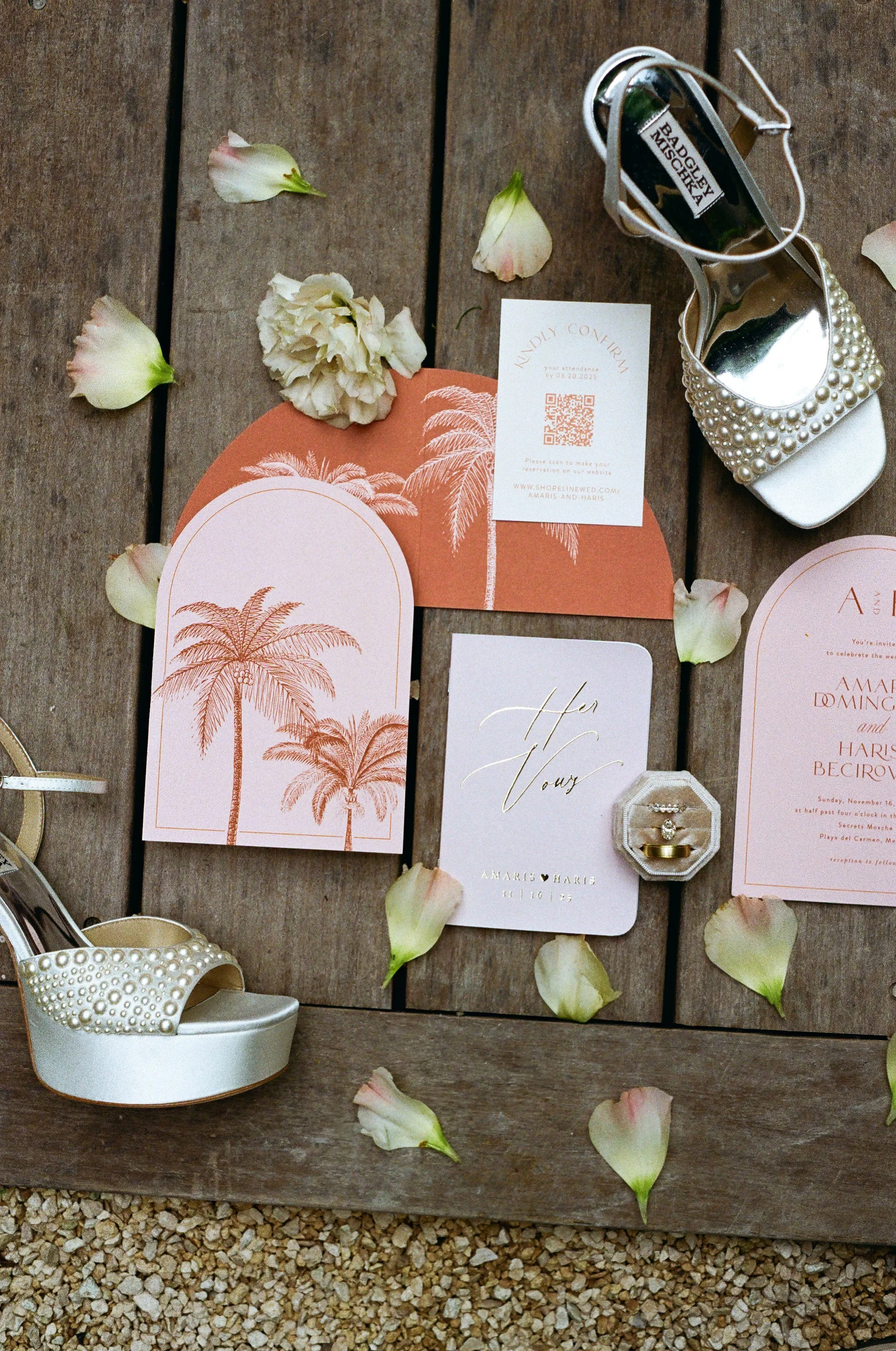
In the final two to three months, the focus shifts to fine-tuning logistics and embracing the emotional elements. Purchasing the wedding bands, sending formal invitations, and writing personal vows deserve time and intention. Scheduling beauty trials and final fittings helps prevent unnecessary stress during the last weeks. The final month is about reviewing, confirming, and delegating, double-checking timelines, preparing final payments, organizing the seating chart, and ensuring everything is aligned.
Here, logistics meet emotion.
Choose and purchase your wedding bands.
Attend premarital counseling if required.
Send formal invitations to confirmed guests.
Confirm bridesmaids have their full outfits.
Purchase thank-you gifts for bridesmaids.
Schedule all beauty appointments (hair, makeup trials, facials, color, etc.).
Arrange transportation for the wedding day.
Confirm dress delivery and fittings.
Purchase bridal lingerie for dress fittings.
Choose ceremony readings and inform participants.
Begin writing your vows if applicable.
Create a “must-play” and “do-not-play” music list.
2 Months Before
The details become official.
Purchase veil, shoes, and final accessories.
Decide on traditional elements (something new, borrowed, blue, etc.).
Finalize the ceremony program.
Apply for your marriage license.
Begin sending thank-you notes for gifts received.
Book bachelor and bachelorette parties.
Attend your first dress fitting.
1 Month Before
This is your master review phase.
Purchase a guest book.
Dedicate a full day to reviewing your entire checklist.
Purchase gifts for parents and special guests, and something meaningful for each other.
Prepare welcome baskets for guests.
Celebrate your bachelor and bachelorette parties.
3–2 Weeks Before
Numbers and confirmations matter now.
Call guests who haven’t RSVP’d.
Finalize your guest list.
Confirm final headcount with venue and caterer.
Notify speakers for wedding toasts.
Send final list to calligrapher for place cards and menus.
Create your seating chart.
2–1 Week Before
Delegate and prepare.
Confirm transportation.
Pick up your marriage license.
Confirm final payments and prepare envelopes with tips.
Share vendor contact list with trusted family members.
Share music list with DJ/band.
Share shot list with photographer and videographer.
Break in your wedding shoes.
Schedule a relaxing spa day.
Attend your final dress fitting.
3–2 Days Before
Pick up the wedding dress (steamed and ready).
Pick up the groom’s suit.
Reconfirm all vendors.
Confirm floral deliveries and bouquet timing.
Ensure hotel welcome baskets are delivered.
Provide guest book and table cards to planner.
Confirm manicure and pedicure appointments.
The Day Before
Rest as much as possible.
Prepare ceremony accessories (lazo, bible, candles, etc.) and assign someone to carry them.
Reconfirm hair and makeup times.
Attend manicure and pedicure appointments.
If hosting a rehearsal dinner, give gifts to parents and wedding party, and enjoy, but return early.

Wedding Day
And then, the wedding day arrives. After months of planning, that day is not for managing details, it’s for living the moment. Have a good breakfast, surround yourselves with people who bring you calm, and allow each emotion to unfold naturally. Trust the work you’ve done and the team you’ve chosen. Because beyond the perfect décor or the carefully selected menu, what truly matters is that you are celebrating the beginning of your life together.
Have a good breakfast and enjoy every moment.
Arrive early for hair and makeup and enjoy it with your closest friends.
Toast with one glass of champagne (just one).
Give the rings to the best man or maid of honor.
Introduce the person responsible for final payments to the planner.
Walk down the aisle, breathe deeply, and live the moment fully.
After the Wedding
The Day After:
Send your bouquet for preservation.
Inspect and send your dress to professional cleaning.
In the Following Days:
Send thank-you notes to vendors and leave reviews.
Call guests to thank them for attending.
Finish sending thank-you notes for gifts.
A wedding is not just a single celebration, it’s a carefully built experience. When you follow a clear checklist like this, the process feels intentional, organized, and joyful. And when the big day arrives, you can truly let go and simply celebrate the beginning of your life together.
